

At Has Metal Work, we treat this critical metal-joining discipline as a precise science rather than a basic utility. Operating from our central workshop along River Way in Harlow, Essex, and utilizing our extensive manufacturing capacity in Istanbul, Turkey, our certified team of welders combines advanced metallurgy with decades of hands-on expertise. We realize that a welded joint is only as reliable as the preparation, heat management, and filler synergy applied during the run. Whether we are fabricating high-end stainless steel architectural features inside our Harlow workshop or deploying our fully equipped mobile units for emergency structural repairs on an active London building site, we maintain an uncompromising focus on structural integrity. By aligning our internal workshop controls with the highest standards in the industry, we provide our commercial and residential clients with the absolute assurance that their structures are built to endure.
Understanding Different Industrial Welding Processes
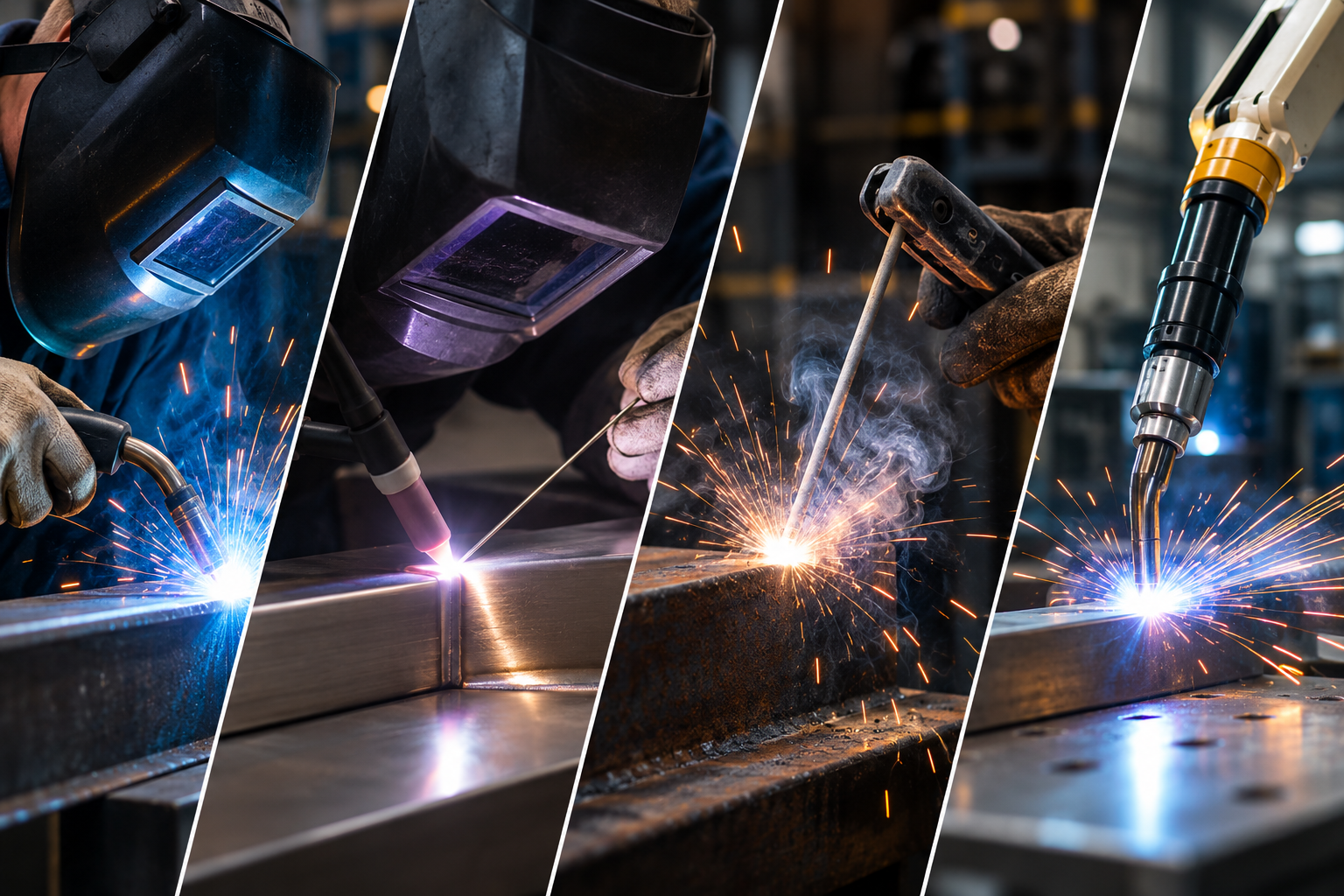
The broader landscape of contemporary metal joining encompasses several highly distinct processes, each designed to manage specific material thicknesses, structural environments, and joint geometries. Selecting the correct method is the first and most critical step in guaranteeing the structural soundness and visual finish of the final assembly.
Shielded Metal Arc Welding (SMAW)
Commonly known to fabricators and site contractors as stick welding, Shielded Metal Arc Welding is one of the most versatile and historically reliable methods in the industry. This process utilizes a consumable electrode coated in a chemical flux. As the electric arc melts the core wire, the flux coating decomposes to generate a protective shielding gas and a layer of slag that covers the weld pool, preventing atmospheric contamination from oxygen and nitrogen.
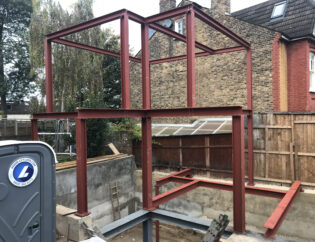
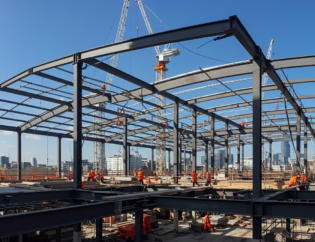
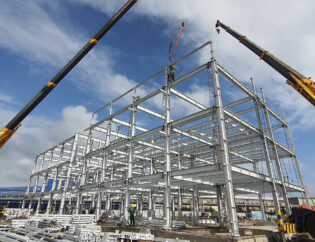
Because stick welding does not rely on external pressurized gas cylinders, it is highly portable and exceptionally effective for outdoor construction, high-elevation steel erection, and emergency field repairs, even in adverse British weather conditions. Our site teams frequently deploy stick welding to secure heavy steel column splices and structural moment connections directly on-site.
Gas Metal Arc Welding (GMAW)
Widely referred to as MIG welding, Gas Metal Arc Welding is a semi-automatic process prized for its high production speed, clean finish, and outstanding efficiency on the workshop floor. MIG welding utilizes a continuously fed solid wire electrode that acts as both the heat source and the filler metal, shielded by an externally supplied inert gas mixture, typically argon and carbon dioxide.
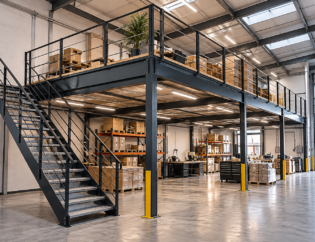
This process is highly favored for manufacturing commercial structural steel components, mezzanine frames, and heavy-duty plate fabrications because it allows for long, continuous weld beads with minimal cleaning required afterward. Our fabricators in Harlow utilize advanced MIG equipment to process structural beams quickly, ensuring a highly uniform bead profile and excellent fusion depth across varying material thicknesses.
Gas Tungsten Arc Welding (GTAW)
Commonly known as TIG welding, Gas Tungsten Arc Welding represents the peak of precision, aesthetic quality, and technical control in the metal-joining industry. Unlike other methods, TIG welding utilizes a non-consumable tungsten electrode to establish the electric arc, while the welder manually feeds a separate filler rod directly into the weld pool under a strict shield of pure argon gas.
This dual-handed technique allows the welder to control the heat input and feed rate with extreme accuracy, producing neat, aesthetically flawless welds that require virtually no post-weld cleanup. TIG welding is the definitive choice for thin-gauge sheets, stainless steel architectural balustrades, industrial food-processing equipment, and complex aluminium assemblies where complete penetration and ultimate structural integrity are non-negotiable.
Material Compatibility, Metallurgy, and Selection
A successful weld is not simply a product of machine calibration; it is a direct result of understanding physical metallurgy and material science. Different structural metals react uniquely to high-temperature thermal cycles, requiring specialized joint preparation, specific filler alloys, and tailored pre-heat or post-weld cooling protocols to prevent mechanical defects.
Structural Carbon Steel
Carbon steel is the undisputed baseline of the construction sector, valued for its immense tensile strength, rigidity, and excellent cost-effectiveness. However, welding structural steel requires a careful calculation of its carbon equivalent. High-carbon steels can easily form brittle microstructures, such as martensite, if the joint is cooled too rapidly after welding, making the connection highly susceptible to hydrogen cracking.
To prevent these defects, our fabricators thoroughly clean the joint edges, monitor interpass temperatures, and utilize low-hydrogen electrodes. This ensures that the weld zone remains highly ductile and fully integrated with the surrounding steel plates.
Stainless Steel
Stainless steel is highly prized for its exceptional corrosion resistance, making it essential for medical facilities, catering environments, and exposed architectural metalwork. This resistance is due to its high chromium content, which forms a protective oxide layer on the metal surface. However, heating stainless steel to temperatures between 450 and 850 degrees Celsius can cause sensitization, a molecular reaction where chromium carbides precipitate along the grain boundaries. This depletes the chromium in the surrounding metal and makes the joint highly vulnerable to localized rust.
To preserve the corrosion resistance of stainless steel, our welders utilize low-carbon filler wires, apply precise gas backing to shield the root of the weld, and control the heat input carefully to ensure rapid cooling through the critical temperature zone.
Structural Aluminium
Aluminium presents a unique and challenging set of physical properties, including exceptionally high thermal conductivity and a natural oxide layer that melts at a temperature far higher than the underlying metal. This means that a standard weld arc can easily burn through the thin metal plate if the oxide layer is not thoroughly removed beforehand.
Welding aluminium requires advanced AC TIG or specialized pulsed MIG equipment to break up the surface oxide while managing the heat input. Our team uses specialized stainless steel wire brushes to prep all aluminium joints and selects the correct filler alloys to ensure a strong, porosity-free bond that is ideal for lightweight architectural structures and marine installations.
Custom Fabrication and Essential Repair Solutions
Custom metal fabrication and structural repair services are at the heart of what makes professional welding indispensable across various commercial and residential sectors. These tailored solutions cater to unique project requirements that mass-produced components simply cannot meet. From intricate architectural metalwork designs to robust industrial machinery, the ability to create bespoke components with precision welding transforms raw materials into highly functional, structurally sound, and visually striking structures.
Experienced welders work in close collaboration with designers and structural engineers to understand the exact needs of a project, translating complex blueprints into expertly crafted metal components. This collaborative approach ensures that the final product aligns perfectly with the client’s operational vision.
Equally important are repair and maintenance welding services, which play a critical role in extending the lifespan of valuable assets. Instead of costly replacements, damaged metal structures, heavy machinery parts, or infrastructure can often be restored to their original strength and functionality through skilled repair welding. This minimizes operational downtime and optimizes resource utilization for businesses that rely on heavy machinery or complex structural installations.
Mobile and On-Site Welding Advantages
The ability to provide mobile welding services and perform high-precision on-site welding brings unparalleled convenience and efficiency to numerous building projects. This completely eliminates the logistical challenges, transport delays, and extra costs associated with moving large, heavy, or immovable steel structures to a centralized fabrication shop. Instead, fully equipped welding teams can deploy directly to your location, whether it is an active construction site, a commercial facility, or a remote industrial yard.
One of the primary advantages of mobile on-site welding is the significant reduction in project downtime. For businesses reliant on operational machinery or critical building infrastructure, having structural modifications or emergency welding repairs performed directly at their premises means much quicker turnaround times.
This minimizes disruptions to production or services, ensuring that projects stay tightly on schedule. Furthermore, on-site welding provides greater flexibility for complex or integrated installations, allowing steel erectors to weld components as they are being assembled to guarantee a perfect structural fit in its final context.
Advancing Quality Standards: Our Ongoing Commitment to Welding Excellence
In the UK engineering and construction sectors, regulatory compliance and structural safety form the foundational baseline of every single build. Permanent metal joinery used in buildings must meet exceptionally strict quality standards to guarantee long-term public safety and structural performance under extreme environmental stress.
As a forward-thinking structural specialist, Has Metal Work is deeply committed to continuously elevating our internal manufacturing controls, quality assurance workflows, and welding quality processes. While the structural steel industry frequently benchmarks shop operations against rigorous European and British frameworks—such as the ISO 9001 quality management standard, alongside the essential UKCA and CE marking compliance regulations for structural steelwork—our team treats these rigorous industry expectations as an active journey of continuous internal improvement.
We are systematically structuring and continuously aligning our internal detailing systems, material tracking sheets, and non-destructive weld testing procedures to closely mirror and approach these gold-standard international criteria. We proactively train our fabricators in advanced structural welding procedures and source our raw materials exclusively from trusted, fully verified suppliers. This dedicated approach ensures that every beam, column, gate, and custom splice connection leaving our Harlow facility provides the absolute structural reliability that tier-one contractors and structural engineers demand.
Quality Assurance & Emerging Technological Trends
The field of welding is continuously evolving, driven by rapid advancements in technology and the demand for higher precision, material optimization, and workspace sustainability. Modern power sources, such as inverter-based welding machines, are becoming more energy-efficient and compact, providing finer control over critical welding parameters to yield cleaner, stronger bonds with minimal heat distortion. Furthermore, advanced digital control interfaces allow for real-time monitoring of weld penetration and bead profile consistency, ensuring uniform quality across high-volume orders.
Quality assurance protocols include a series of rigorous checks at various stages of the welding process, from initial material verification to final examination. After a weld is completed, a range of non-destructive testing (NDT) methods—such as ultrasonic testing to detect subsurface flaws, magnetic particle inspection for shallow discontinuities, or dye penetrant testing—are routinely employed to verify internal joint integrity without altering or damaging the material.
By actively embracing these technical innovations and maintaining strict testing procedures, modern fabrication workshops can deliver highly reliable, safe, and sustainable metal joining solutions that successfully satisfy tomorrow’s engineering challenges today.
Frequently Asked Questions
What information do you require to provide a precise welding or fabrication quote?
To deliver an accurate, competitive estimate, our technical team requires your detailed engineering drawings, architectural layout plans, or material specification sheets. For repair or modification work, clear site photos and dimensions of the existing metalwork are highly helpful.
Can your mobile welding units perform heavy-duty structural welding on-site?
Yes, absolutely. Has Metal Work operates fully equipped mobile welding units capable of performing heavy-duty structural welding, custom modifications, and emergency repairs directly on-site. Our mobile teams bring specialized power sources and gear to handle MIG, TIG, and stick welding directly at your location.
How do you verify the quality and strength of your welded joints?
We enforce a strict quality assurance process, including rigorous joint preparation, precise control of heat parameters, and meticulous visual checks. For critical load-bearing applications, we utilize advanced non-destructive testing (NDT) methods like ultrasonic and magnetic particle testing to ensure every joint approaches top safety standards.
Do you weld materials other than mild steel, such as stainless steel or aluminium?
Yes, we specialize in a wide range of materials. Our welders possess the technical training and specialized equipment required to handle the unique thermal and metallurgical characteristics of carbon steel, marine-grade stainless steel, structural aluminium, and various high-performance alloys.
Fuse Design and Engineering with Our Expert Metallurgical Services
Creating a high-strength structural framework, repairing heavy machinery, or detailing intricate architectural assets requires a specialized partner who understands the mechanical and metallurgical demands of modern metalwork. Whether you are currently detailing a complex structural steel modification or require urgent, certified mobile welding services on a construction site in Essex or London, the dedicated engineering team at Has Metal Work is ready to deliver flawless, code-compliant results.
Operating from our modern Harlow facility, we maintain total quality control over every thermal cycle, joint preparation, and filler metal selection. We invite you to contact our head office today to discuss your technical specifications, arrange a detailed on-site survey, or receive a tailored structural welding proposal designed to keep your build structurally sound, legally compliant, and perfectly on schedule.
You must be logged in to post a comment.