
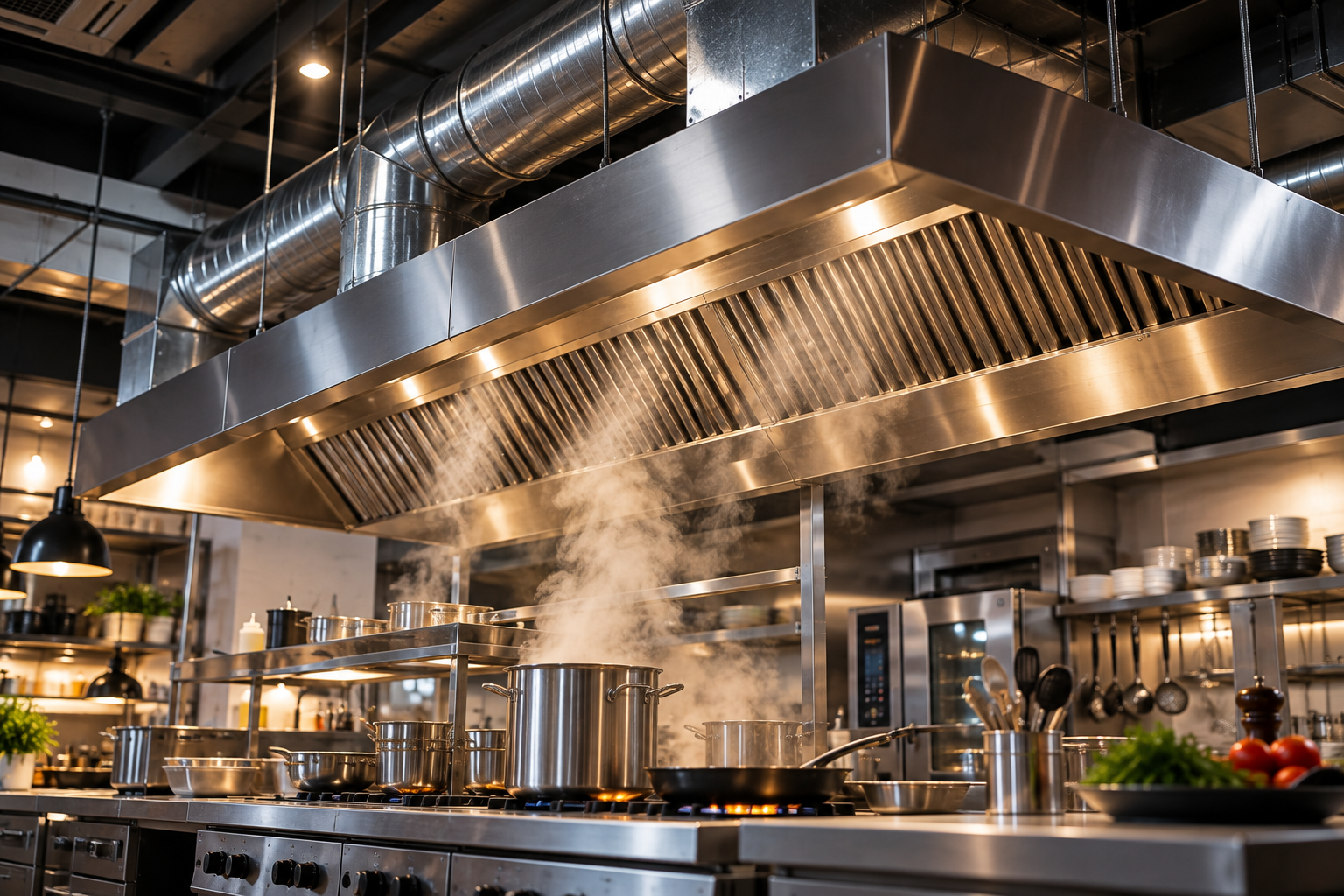
Commercial kitchen extraction is not simply a matter of hanging sheet metal and bolting an inline fan to a roof penetration. A high-output kitchen produces gallons of vaporized grease, volatile cooking odours, intense convection heat, and toxic combustion gases daily. When an extraction setup fails to perform, the root cause is almost always an undersized canopy, inadequate make-up air, poorly routed ductwork, or a failure to comply with the British standard for kitchen ventilation: BESA DW172.
At Has Metal Work (known across London and Essex trade circles as Has Metalwork), our sheet metal fabrication and installation engineers build systems designed to solve these exact problems. Operating directly out of our workshop along River Way in Harlow, Essex—supported by our high-tonnage production facility in Istanbul, Turkey—we design, fabricate, and install commercial kitchen extraction systems that protect food businesses from planning shutdowns, licensing delays, and fire risks.
3 Critical Failures in Commercial Kitchen Extraction (And How to Fix Them)
1. Spillage and Grease Condensation on Kitchen Walls
- The Root Cause: The extraction canopy does not have enough overhang or adequate capture velocity. Standard appliances require an overhang of at least 250mm on all open sides, extending to 400mm or more for combination ovens to capture dynamic steam bursts when doors swing open.
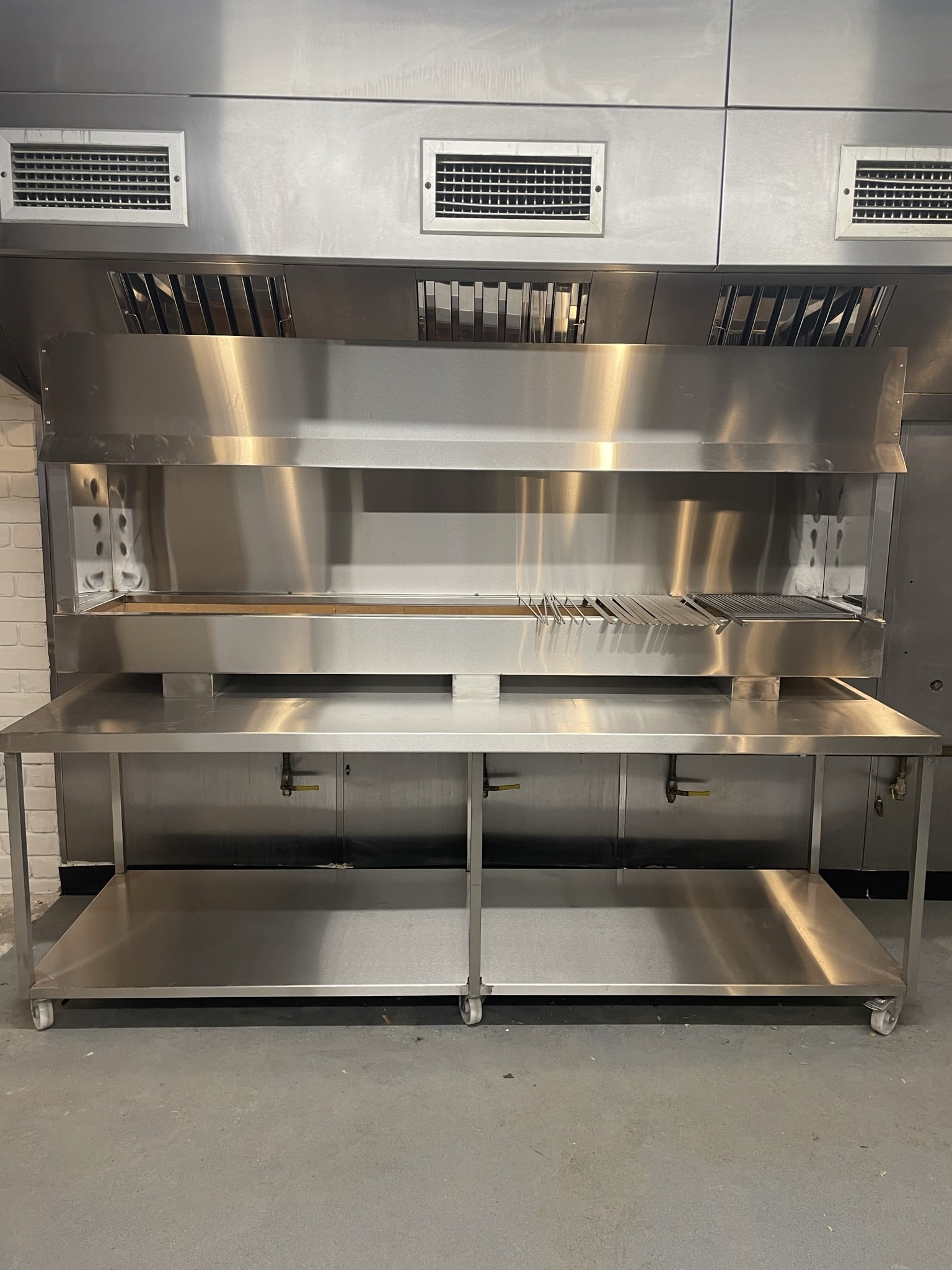
- The Engineering Fix: We custom-cut and bend grade 304 food-grade stainless steel with continuous internal grease troughs and sloped baffle filter banks. Every corner joint is fully TIG-welded to create a liquid-tight barrier, preventing cooking grease from pooling in ceiling voids or dripping onto food preparation tables.
2. Negative Pressure and Stifling Kitchen Heat
- The Root Cause: Exhaust fans pull thousands of cubic metres of air out of the building every hour, but there is no dedicated system replacing it. The result is negative air pressure: kitchen doors become difficult to pull open, back-drafting occurs through gas flues, and temperatures climb past 40°C.
- The Engineering Fix: We install balanced make-up air systems. Supply air is delivered through perforated front fascias or dedicated ceiling diffusers at low velocity (typically around 85% of total extracted volume). This prevents draughts from cooling hot dishes while supplying fresh, filtered replacement air to the kitchen brigade.
3. Council Odour Complaints and Planning Refusal
- The Root Cause: Discharging greasy exhaust air at low levels or near residential windows in dense London boroughs (such as Hackney, Westminster, or Camden) triggers immediate statutory nuisance complaints.
- The Engineering Fix: We engineer bespoke multi-stage abatement runs. Depending on your menu profile (charcoal grilling, deep frying, or light baking), we incorporate electrostatic precipitators (ESPs) to capture sub-micron grease smoke, followed by activated carbon filter banks and inline acoustic silencers designed to keep discharge noise at least 5 to 10 dB below night ambient background levels.
Field Case: Emergency Retrofit in Shoreditch, East London
A 70-cover pan-Asian grill restaurant on Shoreditch High Street faced potential closure after an EHO inspection identified excessive heat accumulation and unapproved grease discharge into an adjoining residential lightwell.
- The Problem: The existing system used an off-the-shelf, undersized 2.5-metre canopy fitted with domestic-grade mesh filters. Grease had seeped into the false ceiling, and staff were operating in an ambient kitchen temperature exceeding 42°C during peak dinner service.
- The Solution: Our surveying team attended the site within 12 hours, using 3D laser scanners to measure the narrow basement kitchen and the tight vertical riser leading to the roof. At our Harlow workshop, we fabricated:
- A bespoke 4.2-metre island canopy from 1.2mm grade 304 stainless steel with integrated LED downlights and high-efficiency stainless steel baffle filters.
- A tempered make-up air supply plenum integrated directly into the front face of the canopy.
- An inline ESP unit and carbon abatement block mounted on the external rooftop discharge run.
- The Outcome: The complete system was fabricated in 6 working days and installed over two consecutive night shifts with zero disruption to dinner trade. Follow-up EHO testing recorded ambient kitchen temperatures of 24°C, compliant airflow across all cooking surfaces, and complete odour mitigation.
Commercial Kitchen Extraction Pricing: What Are You Paying For?
Transparent costs prevent budget blowouts during a restaurant or commercial catering fit-out. Here is a breakdown of what influences pricing:
- Canopy Geometry and Metal Grade: A standard wall-mounted canopy (2.0m to 3.0m) in food-grade 304 stainless steel with baffle filters typically forms the baseline. Island canopies require double-sided filter banks and internal ceiling suspension frames, which increases workshop assembly time.
- Ductwork Run and Fire Compartmentation: A short horizontal wall discharge requires minimal ducting. Conversely, running a duct through three storeys of an existing London building requires tested, fire-rated ductwork or specialist intumescent wrap to meet BS 476 / BS EN 1366 fire separation standards.
- Odour Abatement Technology: Standard grease baffle filters are cost-effective. Adding an Electrostatic Precipitator (ESP) unit, UV-C ozone injection, or activated carbon filtration modules for high-odour cooking adds specialized hardware costs, but is often a mandatory condition of local council planning approval.
- Gas Interlock Systems: Integrating a BS 6173-compliant gas safety interlock panel with differential pressure switches is mandatory for all gas-fired cooking equipment, ensuring gas supply is cut if ventilation fans fail.
Frequently Asked Questions
Can I use domestic or lightweight stainless steel for my extraction hood?
No. Commercial environmental health regulations require a minimum of 1.0mm to 1.2mm thick grade 304 austenitic stainless steel. Lower-grade ferritic steels (such as 430) or thinner metal gauges corrode quickly under contact with animal fats, steam, and industrial alkaline degreasers.
How often does commercial kitchen ductwork need to be cleaned by law?
Under BESA TR19 guidelines and standard commercial building insurance policies, kitchen extract ductwork must be professionally inspected and deep-cleaned at regular intervals:
- Heavy use (12–16 hours daily): Every 3 months
- Moderate use (6–12 hours daily): Every 6 months
- Light use (2–6 hours daily): Every 12 months
What happens if our kitchen extraction fails during service?
If an extraction fan fails on a gas-equipped line, an installed BS 6173 gas interlock system will automatically isolate the gas solenoid valve, safely shutting down your cookline until airflow is restored.
Fix Your Kitchen Ventilation Issues Before the Next Inspection
A failing extraction system endangers your staff, risks your commercial lease, and threatens your operating license. Whether you are fitting out a new restaurant in Central London, adding charcoal grills to an existing kitchen, or need to replace a failing extraction canopy in Essex, Has Metal Work delivers engineered systems that pass inspection every time.
Speak Directly with Our Fabrication & Mechanical Team:
- Workshop & Office: Unit 15, Ozdil House, River Way, Harlow, Essex
- Direct Capabilities: Rapid 3D Laser Surveys | DW172 Extraction Calculations | Stainless Steel Fabrication | Emergency Retrofits & Installation
- Next Step: Contact our technical team today with your kitchen equipment layout to book an on-site survey or receive a fixed-price proposal for your ventilation system.

You must be logged in to post a comment.